
Once again, I found myself pondering the age-old question: “Is the Cloud simply other people’s computers?” It’s amusing, really, and I must confess, I rather enjoy that notion. In fact, I even have a T-shirt adorned with that very statement. Its charm lies in its apparent simplicity – yet, there’s an underlying truth to it.

However, the crux of the matter lies in the misconception about the Cloud being merely a rental service for computers. In reality, the Cloud transcends the traditional concept of computing resources. While it does offer computing power, shared computers have been around since the 1960s, and hosting services have existed since the ’90s. Remember those days? ISPs rented out pieces of computing power, whether in the form of shared web servers or dedicated machines. Yet, that wasn’t the Cloud.
The very first cloud?
So, when did the Cloud truly emerge? The term “the cloud” was coined – or at least popularized – by Mr. Eric Schmidt, the CEO of Google. The media latched onto the term, and it quickly became a viral sensation. Let’s pay homage to him with a picture:

The guy behing “the Cloud” term
But what about the Cloud itself? Amazon AWS, the web hosting service of the online bookstore giant, ventured into “cloud computing business” in 2006.
However, something akin to the Cloud had been brewing for quite some time. Shared computing resources, groundbreaking services, and the promise of virtually limitless data storage – all of these were facilitated by data centers, rendering it virtually impossible to operate solely from on-premises infrastructure.
There’s a tale of a true visionary who once proclaimed that there’s a global market for only five clouds. For years, he was misunderstood and even ridiculed. His foresight surpassed that of ordinary minds, envisioning a future akin to that of Mr. Watson.
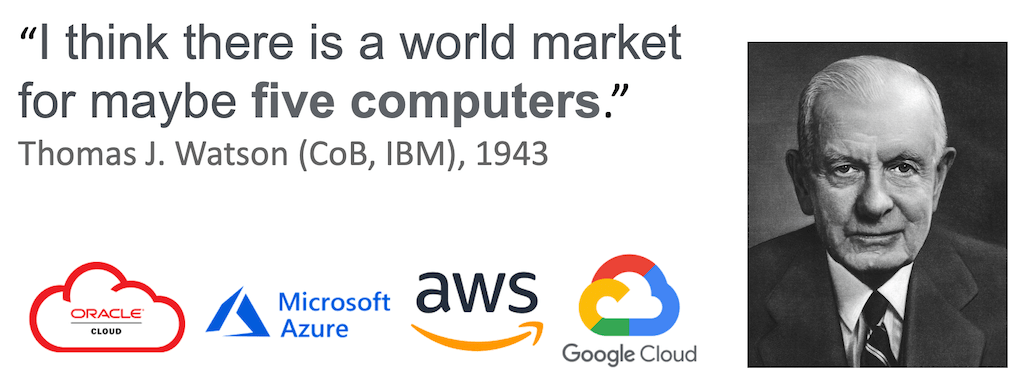
One could argue that the shared IT services market has been evolving since the 1960s to its current state. The market has expanded exponentially, and technological advancements have been nothing short of remarkable. Notably, the level of automation has surged to unprecedented levels, almost beyond belief.
The advent of industrially manufactured computing systems in the 1960s marked a significant milestone. Virtualization, pioneered by a company named VMware in 2001, proved to be a pivotal moment, revolutionizing the automation of IT environments. Subsequently, distributed computing and automation ushered in the era of the Cloud. The diagram below illustrates this transformative journey:
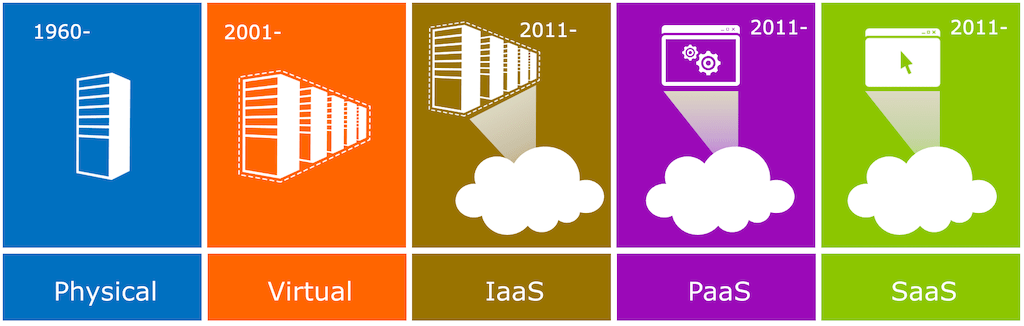
Virtualization enabled an unprecedented degree of automation. A single administrator could now manage over a hundred servers, a monumental leap in enhancing the efficiency of IT operations. Naturally, the demand for data processing power and storage skyrocketed exponentially.
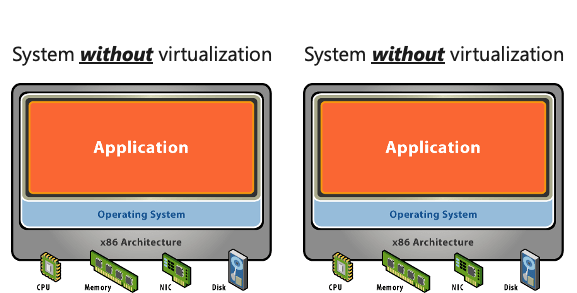
Let’s delve briefly into virtualization technology. It facilitated the automation of tedious and routine tasks, while also optimizing space and reducing energy consumption.
Perhaps the most significant advantage lies in simplified installations (cloning) and significantly reduced downtime (thanks to features like High Availability and snapshots). Software robotics and automation have further empowered us to accomplish complex tasks with a mere click.

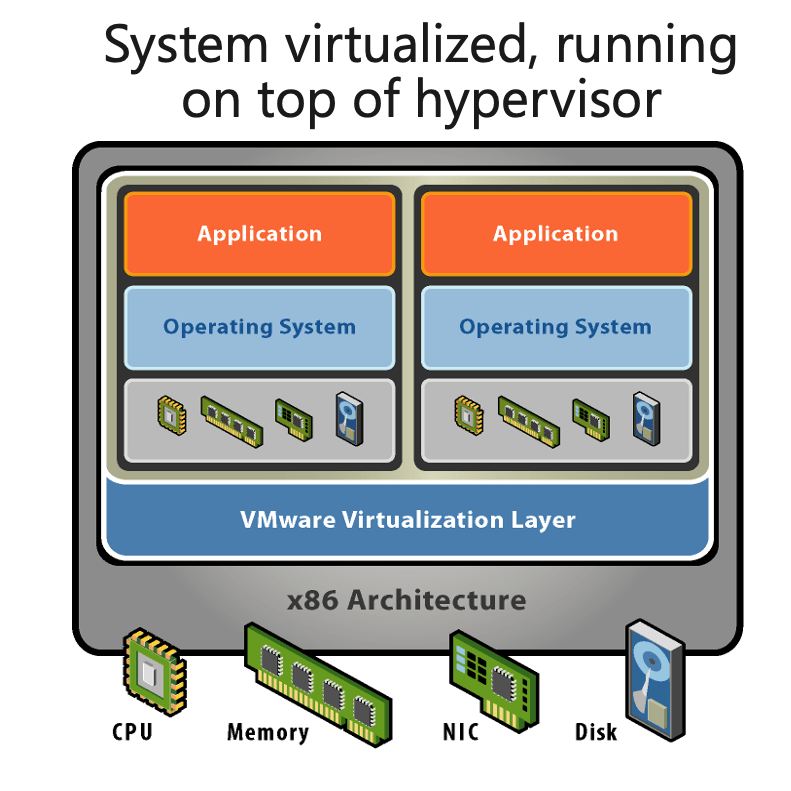
Virtualization, very quick intro
Virtualization abstracts the BIOS, operating system, and applications from physical hardware, enabling multiple virtual machines to share the same physical infrastructure, thus saving costs, space, and energy. Moreover, virtualization standardizes hardware across multiple generations and vendors, eliminating the need for frequent OS re-installations or driver changes.
In essence, the Cloud transcends the realm of mere computer rentals.
As we’ve come to understand, the journey from shared computer systems in the 1960s to today’s Cloud environments has been nothing short of remarkable.
It’s crucial to acknowledge the myriad services offered within the Cloud. Virtualization was merely the starting point, transitioning servers into virtual machines through shared layers of virtualization hardware (CPU, memory, network, and storage). Subsequent advancements occurred at an exponential pace, culminating in Infrastructure as Code (IaaS), where computing power, memory, storage, network, and software solutions seamlessly integrate into a cohesive entity. Platform as a Service (PaaS) and Software as a Service (SaaS) naturally followed suit.
The classic Pizza as a Service analogy beautifully encapsulates the essence of IaaS, PaaS, and SaaS.

You see the idea when comparing that to the cloud services schema:

By the way – do you need ready made slides for a training or cloud history introduction? Just ping me, done multiple slide shows to cover that topic. And I am willing to share all. “PowerPoint Open Source Spirit”, or something. 😉
 Cloud Coaching Club